
Humidity
-
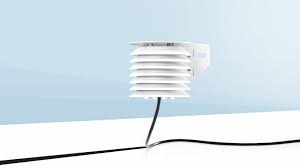
4-IN-1 SENSOR TEMP/RH/BAROMETRIC PRESSURE/VAPOR PRESSURE – ATMOS-14
SKU: ATMOS-14 -

Air Temperature and Relative Humidity Probe – EE181-L
SKU: EE181-L -
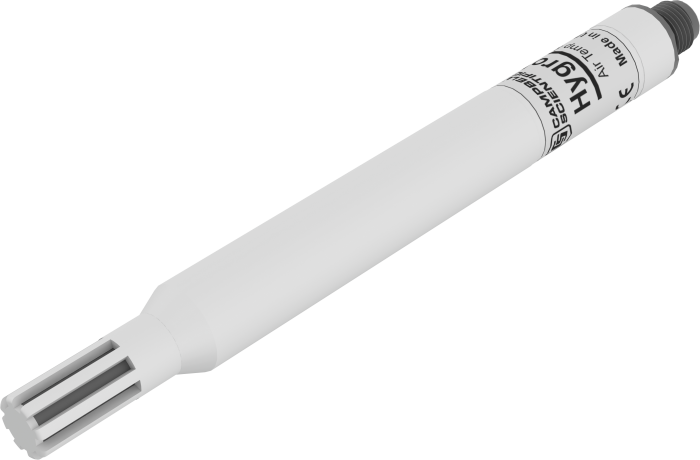
Digital Temperature and Relative Humidity Sensor – HygroVUE10
SKU: HygroVUE10 -
Includes temperature measurement – 41382LC2
SKU: 41382LC2 -
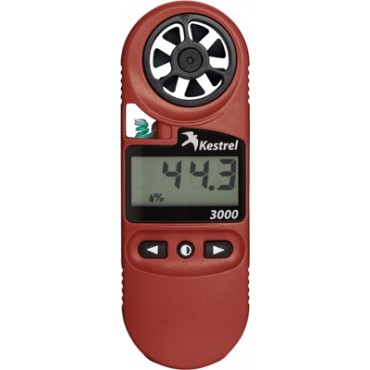
Pocket Weather Instrument – Kestrel 3000
SKU: Kestrel 3000 -
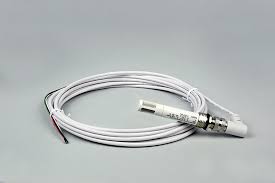
Relative Humidity Probe – EE08-SS
SKU: EE08-SS -
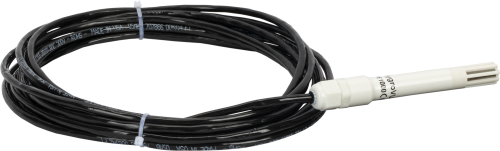
Temperature and Relative Humidity Sensor – HygroVUE5
SKU: HygroVUE5 -
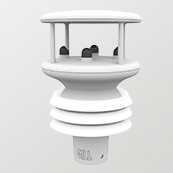
Meteorological Station for Temperature, Humidity and Pressure – GMX500
SKU: GMX500
Professional humidity meters are used to measure, monitor and record air humidity in industrial, meteorological, agricultural and research environments. Accurate humidity measurement is essential for process control, protecting raw materials and products, operating air-conditioning and ventilation systems, monitoring storage conditions, managing greenhouses, forecasting weather phenomena and conducting environmental studies.
Unlike household hygrometers designed to display a general reading, an industrial humidity meter must deliver stable and reliable measurement over time, operate under changing environmental conditions and connect to data loggers, weather stations, controllers and remote monitoring systems.
Most professional humidity measurement systems also measure temperature. This is because relative humidity depends on air temperature, so a correct analysis of environmental conditions requires both variables to be considered together.
Meteo-Tech supplies a wide range of humidity meters, temperature and humidity sensors, portable instruments and monitoring systems for factories, infrastructure companies, research institutions, laboratories, agricultural organizations, weather stations and organizations engaged in environmental measurement.
What Is a Professional Humidity Meter?
A humidity meter, also known as a hygrometer, is an instrument designed to measure the amount of water vapor present in air or gas. In most professional applications, the main value displayed is relative humidity, usually designated RH and measured as a percentage.
Relative humidity expresses the ratio between the amount of water vapor present in the air and the maximum amount the air can hold at the same temperature. When the temperature changes, the air's capacity to hold water vapor changes too. Relative humidity can therefore change even when the amount of water vapor itself does not change significantly.
A professional humidity meter usually includes a sensing element, an electronic circuit for signal processing and an interface for displaying the data or transferring it to an external system. The sensor can be permanently installed in a room, duct, weather station or industrial facility, or be part of a handheld instrument for field testing.
Depending on the model and system, humidity and temperature data can be obtained in real time, historical measurements can be stored, alarms can be triggered and the information can be integrated into automatic control systems.
Why Is Humidity Measurement Important in Industry?
Humidity affects many physical, chemical and biological processes. Unsuitable humidity levels can cause changes in the properties of raw materials, corrosion, mold growth, static electricity buildup, equipment damage and reduced product quality.
Certain industrial processes require a defined humidity range to be maintained in order to ensure stability and uniformity. Deviating from the range can change the drying rate, product weight, material strength, viscosity, electrical conductivity or bonding and coating conditions.
Continuous measurement makes it possible to detect changes before damage occurs. When the humidity meter is connected to a controller, drying, humidification, ventilation, heating, cooling or air-conditioning systems can be activated automatically.
Humidity data can also be used to document process conditions, for quality control, for fault investigation and to demonstrate compliance with internal or regulatory requirements.
What Is the Difference Between Relative Humidity and Absolute Humidity?
Relative Humidity
Relative humidity is the most common parameter in professional humidity meters. It is expressed as a percentage and describes how close the air is to saturation with water vapor at the current temperature.
When relative humidity reaches 100 percent, the air is saturated. Under certain conditions, condensation may begin on surfaces or fog may form.
Absolute Humidity
Absolute humidity expresses the actual amount of water vapor in a defined volume of air. It is usually expressed as the mass of water per unit volume.
This parameter is used in engineering and research applications where the mass of water vapor must be known, not just the ratio to saturation.
Specific Humidity
Specific humidity describes the ratio between the mass of water vapor and the mass of the moist air. It is useful in meteorological, thermodynamic and engineering calculations.
Dew Point
The dew point is the temperature to which air must be cooled to reach saturation and the onset of condensation. It is an important value for preventing moisture on surfaces, corrosion, condensation in pipes and damage to products.
Advanced measurement systems can calculate the dew point from temperature and relative humidity data.
Main Types of Professional Humidity Meters
Humidity and Temperature Sensors for Continuous Measurement
Combined sensors for measuring relative humidity and air temperature are the common solution in weather stations, environmental systems, greenhouses, warehouses and industrial facilities.
The sensor is installed at a fixed point and transmits the data to a data logger, controller or monitoring system. Measurement intervals can be configured, trends can be viewed and deviations can be identified over time.
These sensors are especially suitable for applications that require continuous recording rather than just a spot check.
Handheld Humidity Meters
A handheld humidity meter is a portable instrument that allows measurements to be made at different locations. It is suitable for technicians, engineers, quality control staff, maintenance managers and field personnel.
Handheld instruments can display relative humidity, temperature, dew point and additional parameters. Some include internal memory, minimum and maximum values and averaging.
A portable humidity meter is suitable for checking rooms, warehouses, production lines, ventilation systems, enclosed spaces and environmental conditions at work sites.
Meteorological Humidity Meters
Meteorological humidity sensors are designed to measure air conditions in the open. They are usually installed inside a radiation shield or a meteorological screen, which protects the sensor from direct sunlight and precipitation while allowing air to flow around it.
Meteorological measurement requires high stability, an appropriate response to changes and resistance to outdoor conditions. The sensor must operate over long periods even when exposed to temperature changes, high humidity, dust and wind.
The data can be integrated into a station that also includes a temperature sensor, an anemometer, a rain gauge, a barometer and solar radiation sensors.
Humidity Sensors for Industrial Environments
Industrial sensors are designed for installation in factories, controlled rooms, air ducts, air-conditioning systems and production processes.
Depending on the application, a sensor with an analog output, a digital output or communication suited to an industrial controller can be selected. In some systems the probe can be installed directly inside a duct or measuring chamber.
The sensor must be matched to the humidity and temperature range, the type of airborne contaminants, the flow velocity and the process pressure.
Humidity Meters with a Data Logger
A humidity data logger records measurements at predefined time intervals. It makes it possible to examine how conditions change during the day, night, weekend or production cycle.
Continuous recording is especially important in warehouses, cleanrooms, laboratories, archives, cold rooms and facilities where even a brief deviation could affect the product or equipment.
The data can be downloaded to a computer, graphs and reports can be generated, and the duration of a deviation and the conditions preceding it can be examined.
Remote Humidity Monitoring Systems
A remote monitoring system makes it possible to view data without having to be physically present at the site. The sensors are connected to a controller or logger that transmits the data via a local network, the internet, cellular communication or a wireless system.
Alerts can be configured by email, text message or through a management system when humidity goes outside the desired range.
This solution is suitable for multi-site plants, remote facilities, warehouses, greenhouses, environmental stations and infrastructure systems.
Combined Multi-Parameter Sensors
In professional systems, humidity measurement can be combined with temperature, barometric pressure and other meteorological parameters.
A combined sensor reduces the number of components and cables and provides a broad picture of environmental conditions from a single instrument. However, it is necessary to verify that the accuracy of each parameter meets the requirements of the application.
How Does a Humidity Sensor Work?
Modern humidity sensors are usually based on a material that is sensitive to changes in the amount of water vapor in the environment. When humidity changes, one of the material's electrical properties changes as well.
The sensor electronics measure the change and convert it into a relative humidity value. An integrated temperature sensor allows compensation and the calculation of additional parameters.
Capacitive Humidity Sensor
A capacitive sensor includes a layer that absorbs water vapor. A change in the amount of water in the layer causes a change in electrical capacitance.
This technology is common in professional sensors thanks to its wide measuring range, low power consumption and ability to provide continuous measurement.
Resistive Humidity Sensor
In a resistive sensor, the electrical resistance of the material changes according to the amount of moisture it has absorbed.
Sensors of this type can suit a variety of applications, but their stability, operating range and suitability for the environment should be evaluated.
Dew Point Sensor
Dedicated dew point sensors measure the temperature at which condensation begins. They are used in compressed air systems, gases, drying processes and applications where the humidity level is especially low.
Humidity Meters for the Food and Beverage Industry
The humidity level affects the quality, weight, texture, shelf life and microbial growth of food products.
In warehouses and production areas, suitable conditions must be maintained to prevent moisture absorption, drying out, mold formation and changes in the properties of raw materials.
Professional humidity meters are used in processes such as:
- Raw material storage
- Product drying
- Proofing
- Chilling and freezing
- Powder production
- Grain storage
- Bakery production
- Product packaging
- Spice storage
- Production room control
When measuring humidity in a food environment, it is also important to consider hygiene, the suitability of construction materials and the ability to carry out maintenance and calibration.
Humidity Meters for the Pharmaceutical and Biotechnology Industries
Pharmaceutical products and biological materials can be highly sensitive to humidity. Exposure to unsuitable conditions can impair stability, physical properties and shelf life.
Humidity monitoring systems are used in cleanrooms, laboratories, warehouses, weighing areas, production rooms and storage facilities.
In these applications, it is important to choose a system that provides:
- Appropriate accuracy
- Continuous data recording
- Real-time alerts
- Measurement history storage
- Report generation
- Data backup
- Calibration records
- Permission management
- Long-term stability
Humidity Meters for the Electronics Industry
High humidity can cause corrosion, electrical leakage, condensation and damage to electronic components. Conversely, humidity that is too low can increase the risk of static electricity buildup.
Electronics plants need to maintain a balanced range suited to the process, materials and equipment. Humidity meters are used in production rooms, component stores, assembly lines, laboratories and equipment cabinets.
Connecting the sensors to the control system makes it possible to regulate air-conditioning, humidification and drying systems according to real-time conditions.
Humidity Meters in the Plastics Industry
Certain plastic raw materials absorb moisture from the air. Moisture in the material before injection molding or processing can cause defects, bubbles, color changes and reduced product quality.
Measuring humidity in storage and drying areas helps maintain stable conditions and reduce process faults.
Humidity sensors can be integrated into dryers, warehouses, production rooms and raw material conveying systems.
Humidity Meters for the Paper, Cardboard and Printing Industries
Paper and cardboard react to changes in ambient humidity. High humidity can cause swelling, warping and difficulty feeding machines. Low humidity can cause drying out, static electricity and brittleness.
In the printing industry, humidity also affects color registration, ink adhesion and print quality.
Measuring and controlling humidity in production and storage rooms makes it possible to keep the material stable and reduce rejects.
Humidity Meters for Warehouses and Logistics Centers
Warehouses are used to store raw materials, finished products, packaging, documents, equipment and sensitive components. Humidity conditions are not always uniform across the entire warehouse area.
Placing multiple sensors makes it possible to identify areas of high or low humidity, examine the effect of doors and air-conditioning systems and improve air distribution.
A monitoring system can issue an alert in the event of an air-conditioning fault, water ingress or an abnormal change in environmental conditions.
Humidity Meters for Laboratories and Controlled Rooms
In laboratories, test rooms and calibration rooms, a change in humidity can affect instruments, materials and measurement results.
A professional system makes it possible to record environmental conditions while tests are being performed and to verify that they are within the required range.
In controlled rooms, humidity sensors can be integrated into the building management system and dehumidification or humidification systems can be activated as needed.
Humidity Meters for Agriculture and Greenhouses
Air humidity affects the evaporation rate, water consumption, stomatal opening, plant development and the risk of disease.
Prolonged high humidity can encourage the development of fungi and diseases. Humidity that is too low can increase water loss and put the plant under stress.
In greenhouses, humidity sensors can be connected to a control system that operates ventilation, heating, fogging, cooling and irrigation.
Humidity data is also used to calculate vapor pressure deficit, which helps assess evaporation potential and growing conditions.
Humidity Meters for Meteorology and Weather Forecasting
Humidity is one of the most important variables in atmospheric analysis. It affects the formation of clouds, fog, dew and precipitation, as well as thermal comfort.
Humidity sensors are installed in weather stations and provide data for weather forecasting, climate research, agriculture, aviation and risk management.
When humidity data is combined with temperature, pressure, wind and solar radiation, a more complete picture of atmospheric conditions can be obtained.
Humidity Meters for Environmental Monitoring
In environmental monitoring, humidity sensors are used to assess air conditions and to interpret data from other instruments.
Humidity can affect the behavior of particles, gases and pollutants. It is therefore measured at air quality stations, waste sites, industrial zones, environmental laboratories and research sites.
Continuous recording makes it possible to examine the relationship between humidity levels and changes in other environmental parameters.
Humidity Meters for HVAC Systems
Air-conditioning systems are required to regulate not only temperature but also humidity. Humidity sensors can be installed in rooms, in air ducts, at the inlet and outlet of air handling units and in sensitive areas.
Sensor data is used to operate humidification, dehumidification, heating and cooling systems. Proper control helps improve environmental conditions and reduce unnecessary energy consumption.
In a system with multiple zones, different setpoints can be defined according to the use of each space.
Humidity Meters in Server Rooms and Telecommunications Facilities
Computing and communications equipment is sensitive to extreme humidity conditions. High humidity can cause condensation and corrosion, while humidity that is too low increases the risk of static electricity.
Humidity sensors are combined with temperature sensors to monitor conditions in server rooms, telecommunications cabinets and data centers.
An alarm system makes it possible to respond quickly to an air-conditioning fault or an abnormal change before damage is caused to the equipment.
Humidity Meters in Museums, Archives and Document Stores
Works of art, books, documents, wood, textiles and historical materials are sensitive to changes in humidity.
High humidity can encourage mold, corrosion and material deterioration. Low humidity can cause drying out, cracking and brittleness. Rapid fluctuations can also cause dimensional changes and cumulative damage.
Continuous monitoring makes it possible to maintain stable conditions and to document the storage and display environment.
Connecting a Humidity Meter to a Data Logger
A data logger receives the signal from the sensor and stores the measurements at the configured time interval. High-frequency logging can be selected for fast processes, or lower-frequency logging for long-term climate monitoring.
When choosing a data logger, check:
- Compatibility with the sensor's signal type
- Number of measurement channels
- Memory capacity
- Sampling rate
- Input accuracy
- Power supply source
- Communication options
- Software compatibility
- Alarm capability
- Resistance to environmental conditions
In critical systems, it is also recommended to plan for power backup and data backup.
Connecting a Humidity Meter to a Control System
Professional humidity sensors can be connected to industrial controllers and building management systems using analog signals or digital communication.
The system can use the data to operate:
- Drying systems
- Humidifiers
- Ventilation systems
- Air conditioners
- Heating elements
- Fans
- Greenhouse windows
- Fogging systems
- Alarms
- Emergency systems
Make sure that the sensor's signal type matches the controller inputs and that the entire measurement chain is properly configured and calibrated.
Data Available from a Humidity Measurement System
A professional system can provide a wide range of data:
- Real-time relative humidity
- Air temperature
- Dew point
- Minimum and maximum values
- Averages over time periods
- Trends
- Time a deviation began
- Duration of the deviation
- Comparison between zones
- Measurement history
- Graphs and reports
- Threshold-based alerts
Combining the data makes it possible to understand not only what the humidity is at a given moment, but how it changes and what affects it.
How to Choose a Professional Humidity Meter?
Measuring Range
Check the relative humidity range and the temperature range within which the sensor can operate. A sensor installed outdoors or in an industrial process may be exposed to more extreme conditions than a sensor in an air-conditioned room.
Accuracy
The required accuracy depends on the application. Meteorological, laboratory or sensitive industrial measurement may require higher accuracy than general warehouse monitoring.
It is important to examine accuracy across the entire humidity range and not just at a single measurement point.
Long-Term Stability
Humidity sensors may change their response over time as a result of exposure to high humidity, dust, chemicals and contaminants.
In a system intended to operate for years, it is important to choose a sensor with suitable stability and to plan periodic checks and calibration.
Response Time
Response time indicates how quickly the sensor responds to a change in conditions. Fast processes require a sensor with a fast response. In warehouses and climate stations, a sensor with a slower but stable response can sometimes be used.
Environmental Conditions
Check whether the sensor will be exposed to dust, water, salts, chemicals, oils, smoke or industrial pollution.
A protective filter, a suitable enclosure or a sensor specifically designed for aggressive environments may be required.
Indoor or Outdoor Installation
An outdoor sensor must be suited to weather conditions and protected from solar radiation and precipitation. An indoor sensor must be installed at a point that represents the conditions of the space.
Portable Instrument or Fixed System
A portable instrument is suitable for spot checks and maintenance. A fixed system is suitable for continuous monitoring, alerts and automatic control.
Data Logging
Determine whether only a local reading is required, or also data storage, report generation and transmission to a central system.
Output and Communication Type
Choose a sensor that is compatible with the data logger or controller. Analog outputs, voltage and current signals or digital interfaces can be used, depending on the system.
Maintenance and Component Replacement
For systems installed at a remote site, it is important to choose a sensor that is easy to check, clean and replace. A replaceable filter or sensing head can make maintenance easier.