
Polarimeters
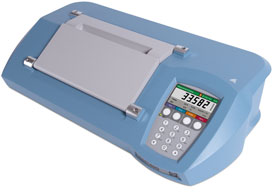
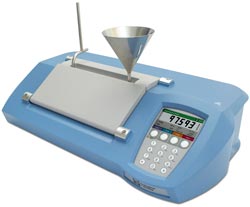
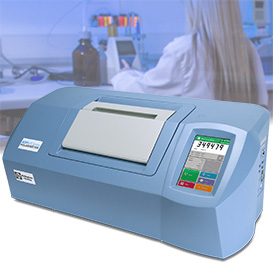

Polarimeters are optical measuring instruments used to measure the angle by which an optically active substance rotates the plane of polarization of light passing through it. This measurement makes it possible to characterize chiral substances, determine solution concentrations, check substance purity, detect changes in composition and compare raw materials, production batches and different formulations.
Polarimeters are used in research laboratories, quality control laboratories and industries where accurate measurement of optically active substances is important. Key sectors include the pharmaceutical, chemical, food, beverage, sugar, cosmetics, biotechnology and flavor and fragrance industries, as well as academic research institutions.
This category features digital and laboratory polarimeters designed for high-accuracy optical rotation measurement. Advanced systems may include temperature control, automatic detection of the direction of rotation, specific rotation calculation, method storage, result documentation and the ability to measure samples across a range of cell lengths and concentrations.
What Is a Polarimeter?
A polarimeter is an instrument that measures the change in the polarization direction of light after it passes through a sample containing an optically active substance.
Ordinary light vibrates in many directions. When light passes through a polarizer, the result is polarized light with a defined plane of vibration. When this light passes through an optically active substance, the plane of polarization rotates to the right or to the left by a certain angle.
The polarimeter measures the angle of rotation and usually displays it in angular degrees. In digital systems the process is performed automatically using a light source, polarizers, a sample cell, an optical sensor and a computing system.
Optical rotation measurement can help determine:
- The identity of an optically active substance.
- The concentration of a substance in solution.
- Optical purity.
- Specific rotation.
- The direction of rotation.
- Batch-to-batch consistency.
- The presence of impurities.
- The progress of a chemical reaction.
- The stability of a substance during storage.
- Compliance with a quality specification.
What Is Optical Activity?
Optical activity is the ability of a substance to rotate the plane of polarization of polarized light. This property is characteristic of substances with a chiral molecular structure.
A chiral molecule is a molecule that cannot be superimposed on its mirror image, much like a right hand and a left hand. The two mirror-image forms of the same molecule are called enantiomers.
Enantiomers can have very similar physical properties, but they rotate polarized light in opposite directions:
- A substance that rotates the plane of polarization clockwise is defined as dextrorotatory and is usually designated with a positive sign.
- A substance that rotates the plane of polarization counterclockwise is defined as levorotatory and is usually designated with a negative sign.
The direction of rotation alone does not indicate the absolute configuration of the molecule. It is therefore necessary to distinguish between the optical rotation designation and other chemical structural designations.
How Does a Polarimeter Work?
A polarimeter typically includes the following components:
- A light source at a defined wavelength.
- A polarizer that produces polarized light.
- A sample cell or measuring tube.
- An optical analyzer.
- A sensor.
- A computing and display unit.
During measurement, the light passes through the polarizer and then through the cell containing the sample. If the sample is optically active, the plane of polarization rotates. The instrument measures the change and calculates the angle of rotation.
In a manual or semi-automatic polarimeter, the operator may adjust the system until a visual balance is achieved. In a digital polarimeter the process is automatic, and the value is shown directly on the display.
Typical measurement steps include:
- Switching on the instrument and allowing the light source to stabilize.
- Cleaning the measuring cell.
- Filling the cell with the sample.
- Preventing air bubbles.
- Placing the cell in the instrument.
- Setting the cell length and temperature.
- Performing the measurement.
- Recording the angle of rotation or the specific rotation.
- Cleaning the cell after the test.
What Is the Angle of Optical Rotation?
The angle of optical rotation is the angle by which the plane of polarization rotates after the light passes through the sample.
The measured angle depends on several factors:
- The type of substance.
- The concentration of the substance in solution.
- The length of the measuring cell.
- The sample temperature.
- The wavelength of the light source.
- The type of solvent.
- The purity of the substance.
- The presence of other optically active substances.
The measured rotation value is therefore not necessarily a fixed property of the substance. To compare measurements, the test conditions must be documented and the same parameters maintained.
What Is Specific Rotation?
Specific rotation is a calculated value that makes it possible to compare the optical activity of a substance under defined conditions, taking into account the sample concentration and the length of the measuring cell.
The value is calculated from:
- The measured angle of rotation.
- The length of the measuring cell.
- The concentration of the substance.
- Temperature.
- Wavelength.
Specific rotation is an important characteristic of optically active substances. The measured value can be compared with an expected value from the literature, a material specification or a test method, helping to verify identity, purity or concentration.
The temperature and wavelength at which the specific rotation was determined should always be stated, since both parameters can affect the result.
What Is Polarized Light?
Ordinary light consists of waves vibrating in many planes. Polarized light is light whose vibrations are restricted to a defined plane.
Polarimeters use a polarizer to convert ordinary light into polarized light. After the light passes through the sample, an optical analyzer checks how the plane of polarization has changed.
The ability to measure a small change in the direction of light makes it possible to identify and quantify the optical activity of substances even when there is no visible change in the color, transparency or appearance of the sample.
Digital Polarimeter
A digital polarimeter performs the measurement and calculates the angle of rotation automatically. The result is shown directly on a display, with no need for manual adjustment of an optical system.
The advantages of a digital polarimeter include:
- Fast measurement.
- Reduced operator influence.
- High resolution.
- Good repeatability.
- Automatic detection of the sign of rotation.
- Specific rotation calculation.
- Result storage.
- Method creation.
- Optional temperature control.
- Data export and report generation.
Digital polarimeters are well suited to laboratories performing routine testing, incoming inspection, process control and product release testing.
Laboratory Polarimeter
A laboratory polarimeter is designed for accurate measurements under controlled conditions. It is suitable for research, development and quality control of optically active substances.
An advanced laboratory system may include:
- A touchscreen.
- Temperature control.
- Multiple measurement modes.
- Cell length setting.
- Concentration calculation.
- Specific rotation calculation.
- Storage of a large number of methods.
- User permissions.
- Measurement history tracking.
- Connection to a printer or computer.
- Result export.
- Support for laboratory documentation requirements.
When results need to be compared over time, it is important to choose a system that provides optical stability, temperature control and full documentation of the measurement conditions.
Manual Polarimeter
A manual polarimeter relies on visual observation and manual adjustment of the analyzer until a balanced state is reached.
Manual instruments can be suitable for:
- Educational institutions.
- Basic experiments.
- Teaching laboratories.
- Tests that do not require automation.
- Applications with a small number of measurements.
Their advantages include a simple design and relatively low cost. However, the reading depends more on the operator's skill, visual acuity and interpretation of the measurement field.
For frequent quality control testing or high accuracy requirements, a digital polarimeter is usually preferable.
Saccharimeter for Sugar Measurement
A saccharimeter is a type of polarimeter designed for measuring sucrose and for applications in the sugar industry. The instrument measures the optical rotation of a solution and displays the result on a scale suited to measuring sugar content or sugar polarization.
Saccharimeters are used to test:
- White sugar.
- Raw sugar.
- Sucrose solutions.
- Molasses.
- Syrups.
- Sugarcane juices.
- Sugar beet products.
- Raw materials in the sugar industry.
- Refining and separation processes.
For complex sugar products, a suitable sample preparation method must be used, since other substances in the solution may affect the measurement.
The Difference Between a Polarimeter and a Refractometer
Polarimeters and refractometers are both optical instruments, but they measure different properties.
A polarimeter measures the rotation of polarized light resulting from the optical activity of a substance. It is mainly suited to chiral substances and to solutions containing optically active substances.
A refractometer measures the refractive index of the sample. It is used to determine solute concentration, Brix values, purity and the properties of a wider range of liquids.
In certain applications, particularly in the sugar industry, the two methods can be combined:
- A refractometer provides information on total dissolved solids.
- A polarimeter provides information on the optical rotation of sucrose.
- Combining the results can help assess composition and purity.
The Effect of Concentration on Polarimeter Measurement
In many systems there is a dependence between the concentration of the optically active substance and the measured angle of rotation. As the concentration increases, the number of optically active molecules in the light path grows, so the angle of rotation can increase.
When the relationship is known and measurement conditions are kept constant, a polarimeter can be used to calculate concentration.
However, the relationship may be affected by:
- Temperature.
- The type of solvent.
- Intermolecular interactions.
- The presence of several optically active substances.
- The concentration range.
- Wavelength.
- Chemical reactions in the solution.
An equation or calibration curve appropriate to the substance and the test conditions should therefore be used.
The Effect of Measuring Cell Length
The optical path length is one of the key parameters in polarimeter measurement. The longer the distance the light travels through the sample, the larger the measured angle of rotation may be.
Long cells improve sensitivity when the optical rotation is low or when the substance concentration is small. Short cells are suitable for concentrated samples or for substances with high rotation.
Cell selection should take into account:
- The sample concentration.
- The expected magnitude of rotation.
- The transparency of the substance.
- The available sample volume.
- The measuring range of the instrument.
- The requirements of the test method.
It is important to enter the correct cell length in the instrument in order to calculate specific rotation or concentration accurately.
The Effect of Temperature on Optical Rotation
Temperature can affect the density of the solution, the molecular structure, interactions between the substance and the solvent, and the optical rotation.
A small change in temperature can cause differences in the result, especially in precise measurements and with sensitive substances.
It is therefore recommended to:
- Measure at a defined temperature.
- Wait for the sample to stabilize.
- Use a temperature-controlled cell.
- Record the measurement temperature.
- Use the same conditions in all comparisons.
- Avoid measuring a sample immediately after heating or cooling.
Advanced systems can use internal temperature control or a connection to an external circulating bath.
The Effect of Wavelength
Optical rotation also depends on the wavelength of the light. Comparative measurements must therefore be made at the same wavelength.
A common light source in polarimetry is the sodium D line, at a wavelength of approximately 589 nm. Some instruments use an LED source that emulates this wavelength, while others allow operation at additional wavelengths.
Measurement at multiple wavelengths can provide additional information about the optical behavior of the substance, but most quality control tests are performed at a defined wavelength in accordance with the method or specification.
Optical Purity Measurement
Optical purity describes the ratio between two enantiomers in a mixture. When a substance consists mainly of one enantiomer, it exhibits optical rotation of a certain direction and magnitude.
If the mixture contains a quantity of the opposite enantiomer, the rotations of the two forms partially cancel each other out. When equal quantities of both enantiomers are present, a racemic mixture is obtained that shows no net optical rotation, even though both forms are present in it.
A polarimeter can help assess optical purity when:
- The active substance is known.
- The specific rotation of the pure substance is known.
- There are no other optically active substances in the solution.
- The concentration and cell length are known.
- The measurement conditions are controlled.
In complex systems it may be necessary to combine the measurement with chiral chromatography or other analytical methods.
Polarimeters in the Pharmaceutical Industry
In the pharmaceutical industry, the chiral structure of active substances is highly important. Two enantiomers of the same molecule may interact differently with biological systems.
Polarimeters are used in the pharmaceutical industry for:
- Identity verification of an active substance.
- Specific rotation testing.
- Optical purity assessment.
- Raw material testing.
- Synthesis process control.
- Finished product testing.
- Research and development.
- Batch-to-batch comparison.
- Stability testing.
- Monitoring changes during storage.
- Compliance with material specifications.
- Pharmacopoeial testing.
Examples of optically active substances tested by polarimetry include sugars, amino acids, alkaloids, antibiotics, steroids and other chiral substances.
Polarimeters in the Sugar Industry
The sugar industry is one of the main sectors in which polarimeters and saccharimeters are used.
Sucrose is an optically active substance that rotates the plane of polarization. By measuring the rotation, the sucrose content of a sample can be estimated under defined test conditions.
Common applications include:
- White sugar testing.
- Raw sugar testing.
- Molasses analysis.
- Sugarcane juice testing.
- Sugar beet testing.
- Refining process control.
- Syrup testing.
- Purity assessment.
- Raw material testing.
- Quality control during production.
For products containing other sugars or other optically active substances, appropriate sample preparation and a calculation method that accounts for the composition are required.
Polarimeters in the Food and Beverage Industry
In the food and beverage industry, a polarimeter can be used to measure optically active substances and to test concentration, composition and purity.
Possible applications include:
- Sugar solutions.
- Syrups.
- Honey.
- Confectionery.
- Flavorings.
- Food additives.
- Organic acids.
- Amino acids.
- Fermentation products.
- Plant-based raw materials.
- Natural extracts.
- Beverage concentrates.
In systems containing several optically active substances, the result should be interpreted with caution, since the total rotation is a combination of the contributions of all the substances.
Polarimeters in the Chemical Industry
Polarimeters are used in the chemical industry to test chiral compounds and to monitor synthesis processes.
Applications include:
- Testing chiral raw materials.
- Controlling chemical reactions.
- Examining substance purity.
- Measuring specific rotation.
- Detecting changes in composition.
- Controlling enantiomer separation.
- Developing chiral catalysts.
- Testing solvents and solutions.
- Stereochemical research.
- Comparing production processes.
Rapid measurement with a polarimeter can provide an indication of the process, but it does not necessarily replace structural or chromatographic identification methods.
Polarimeters in Biotechnology
Many biological substances are optically active, including proteins, amino acids, sugars and natural molecules.
In biotechnology, a polarimeter can be used for:
- Amino acid research.
- Testing sugar solutions.
- Characterizing natural substances.
- Monitoring enzymatic processes.
- Testing biological raw materials.
- Research on chiral molecules.
- Testing fermentation processes.
- Comparing formulations.
- Monitoring solution stability.
In complex biological systems, it should be borne in mind that every optically active substance may contribute to the total rotation.
Polarimeters in the Cosmetics Industry
The cosmetics industry uses a wide range of natural and synthetic substances with optical activity.
A polarimeter can be used to test:
- Essential oils.
- Fragrance materials.
- Plant extracts.
- Sugars.
- Organic acids.
- Active ingredients.
- Natural raw materials.
- Chiral components.
- Concentrated extracts.
- Certain preservatives.
The measurement can help compare raw materials, detect dilution or changes in composition, and check batch-to-batch consistency.
Polarimeters for Flavors and Fragrances
Many flavor and fragrance materials contain chiral molecules. Different enantiomers of the same molecule may have a different odor or taste.
Polarimetry can help with:
- Testing essential oils.
- Verifying the identity of a raw material.
- Detecting dilution.
- Purity testing.
- Comparing suppliers.
- Batch control.
- Research and development.
- Testing natural extracts.
- Monitoring distillation processes.
- Detecting changes during storage.
When there is a complex mixture of optically active substances, the measurement provides a total value rather than a separation of the components.
Using a Polarimeter to Monitor a Chemical Reaction
During a chemical reaction, the concentration of an optically active substance may change, or a new substance with a different rotation may form.
Measuring the rotation over time can help monitor:
- Reaction rate.
- Disappearance of the starting material.
- Product formation.
- A change in the direction of rotation.
- Hydrolysis.
- Sugar inversion.
- Enzymatic reactions.
- Degradation processes.
- Substance stability.
- Equilibrium between molecular forms.
To use a polarimeter for reaction monitoring, the relationship between the angle of rotation and the composition of the system must be established in advance.
Sugar Inversion
Sugar inversion is a process in which sucrose breaks down into glucose and fructose. Each of these substances has a different optical activity, so the total rotation of the solution changes during the reaction.
A polarimeter can be used to monitor the process and to examine:
- The rate of sucrose breakdown.
- The effect of acidity.
- The effect of temperature.
- Enzymatic activity.
- Invert sugar production.
- Food processes.
- Changes in syrup composition.
The measurement makes it possible to follow the reaction without the need for immediate separation of each component.
The Importance of Sample Transparency
Polarimetry is based on light passing through the sample. Sample transparency therefore affects the instrument's ability to perform a stable measurement.
Dark or turbid samples, or samples containing particles, may reduce the light intensity and make measurement more difficult.
In such cases, the following can be considered:
- Filtering the sample.
- Using a shorter cell.
- Appropriate dilution.
- Selecting a different wavelength.
- Using an instrument with a stronger light source.
- Clarification or clearing in accordance with the method.
- Performing the measurement using an alternative analytical method.
Any sample treatment must be carried out in a way that does not change the concentration of the active substance being measured.
Sample Preparation for Measurement
Correct sample preparation is a prerequisite for a reliable result.
Be sure to ensure:
- Complete dissolution of the substance.
- Use of a suitable solvent.
- A known and accurate concentration.
- Accurate weighing.
- A defined final volume.
- Uniform mixing.
- Prevention of bubbles.
- Filtration where necessary.
- A stable temperature.
- Use of a clean, dry cell.
- Complete filling of the light path.
- Prevention of evaporation of volatile solvents.
When calculating specific rotation, an error in the concentration or the cell length will directly cause an error in the calculated result.
Air Bubbles in Polarimeter Measurement
Air bubbles in the measuring cell can disrupt the passage of light and cause an unstable or incorrect reading.
To prevent bubbles, it is recommended to:
- Fill the cell slowly.
- Hold the cell at a suitable angle while filling.
- Tap the cell gently.
- Visually inspect the light path.
- Use a suitable syringe or pipette.
- Prevent foaming of the sample.
- Wait for bubbles to be released before measuring.
With viscous samples, additional time is needed to allow bubbles to rise and escape.
Cleaning Measuring Cells
Cleaning the measuring cell is important to prevent contamination between samples and to maintain the accuracy of the instrument.
After each measurement:
- Empty the cell.
- Rinse with the appropriate solvent.
- Prevent residues on the cell windows.
- Dry as needed.
- Check that there are no scratches.
- Make sure the seals are intact.
- Avoid using substances that attack the cell.
- Store the cell in a protected place.
Residues of an optically active substance from a previous measurement can affect the result even at low concentrations.