
Osmometers


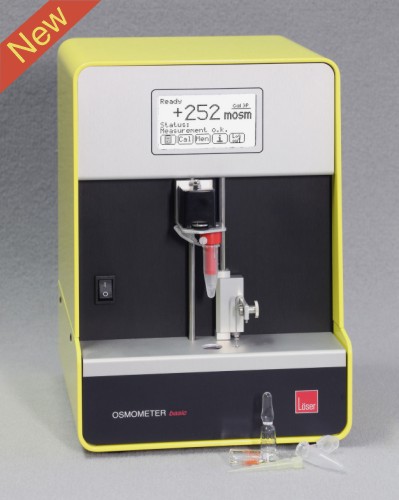
What Is an Osmometer and How Does It Work?
An osmometer is a laboratory instrument used to measure the osmolality of solutions. Osmolality refers to the concentration of osmotically active particles per kilogram of solvent and is typically expressed in milliosmoles per kilogram (mOsm/kg).
Freezing point osmometers operate by measuring the depression of a solution's freezing point compared with that of a pure solvent. As the concentration of dissolved particles increases, the freezing point decreases.
This measurement technique is widely used in pharmaceutical development, biotechnology, laboratory research and quality control.
Common Applications of Laboratory Osmometers
-
Pharmaceutical Industry: Osmolality measurement of pharmaceutical formulations, liquid preparations and solutions for product development and quality control.
-
Biotechnology Laboratories: Analysis of biological samples, cell culture media and laboratory solutions.
-
Clinical Laboratories: Osmolality measurement of serum, urine and other biological fluids using instruments validated for the intended clinical application.
-
Chemical Industry: Evaluation of solution concentration and osmotic properties for research and process monitoring.
-
Quality Control Laboratories: Verification of solution consistency and monitoring of product specifications during development and manufacturing.
How to Choose the Right Osmometer for Your Laboratory
Selecting the appropriate osmometer depends on several important factors, including sample volume, measurement range, accuracy requirements, laboratory throughput, calibration procedures and data management capabilities.
For laboratories working with limited sample volumes, specialised micro-osmometers are available for measuring small quantities of liquid, depending on the instrument specifications.
Meteo-Tech supplies a range of Löser osmometers designed for various laboratory requirements, including models suitable for small sample volumes. Our team can assist in selecting the appropriate instrument based on the sample type, measurement requirements and intended application.
What is an osmometer?
An osmometer is a laboratory instrument used to measure osmolality, which represents the concentration of dissolved particles relative to the mass of the solvent. Osmometers are widely used in pharmaceutical development, biotechnology, scientific research and quality control laboratories.
What is the difference between osmolality and osmolarity?
Osmolality measures the number of osmoles per kilogram of solvent (Osm/kg), while osmolarity measures the number of osmoles per litre of solution (Osm/L). Freezing point osmometers measure osmolality.
How does a freezing point osmometer work?
A freezing point osmometer measures the decrease in a solution's freezing temperature compared with that of the pure solvent. The instrument uses this temperature difference to calculate the sample's osmolality.
What are the main applications of laboratory osmometers?
Laboratory osmometers are used to measure the osmolality of biological and chemical solutions. Common applications include pharmaceutical formulation development, biotechnology research, clinical laboratory testing and quality control.
How do I choose the right osmometer?
When choosing an osmometer, consider sample volume, required measurement range, accuracy, calibration options and data storage capabilities. The most suitable model depends on the sample type, testing frequency and laboratory requirements.