
Refractometers
-
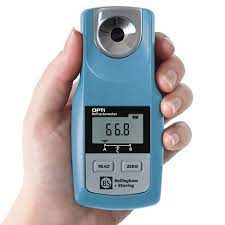
OPTi Digital Handheld Refractometer – Opti
SKU: Opti -
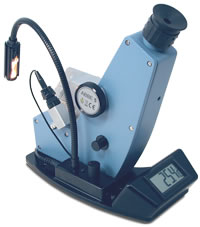
Refractometer ABBE 5
SKU: ABBE 5 -
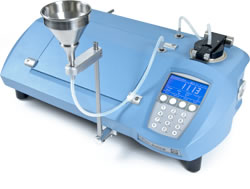
Refractometer Projuice
SKU: Projuice -
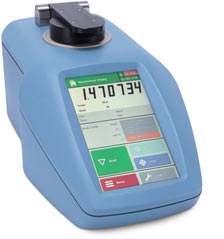
Refractometer RFM300 T
SKU: RFM300 T -
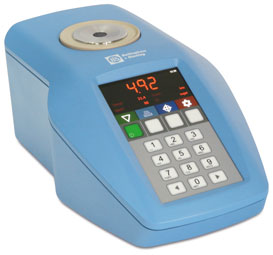
Refractometer RFM700M
SKU: RFM700M -
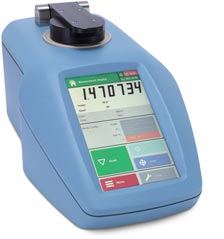
Refractometer RFM900 -T
SKU: RFM900 -T -
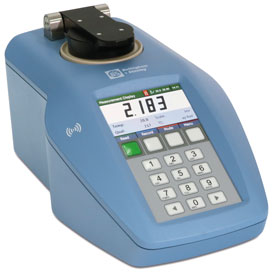
RFM300-M Refractometers
SKU: RFM300-M -
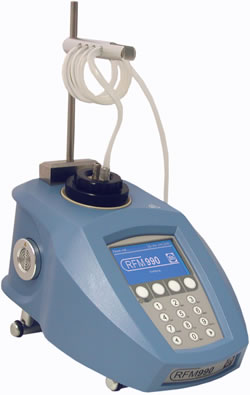
RFM990 Flow Model Refractometer
SKU: RFM990 Flow Model -
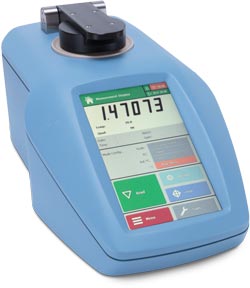
RFM990-AUS32 Refractometer
SKU: RFM990-AUS32
Refractometers are optical measuring instruments used to determine the refractive index of liquids and various other materials. By rapidly measuring how light is refracted as it passes through the sample, they provide information on dissolved solids concentration, sugar content, material purity, solution composition and product consistency.
Refractometers are used in laboratories, manufacturing plants, quality control departments, research and development, and field testing. They enable rapid testing with a small sample volume, without a complex preparation process and, in many cases, without the use of reagents.
This category includes handheld refractometers, portable digital refractometers, high-precision laboratory refractometers and inline refractometers designed to be integrated directly into production lines. The instrument is selected according to the sample type, measurement range, accuracy level, working conditions and the scale in which the result is required.
What Is a Refractometer?
A refractometer is an instrument that measures the refractive index of a material. The refractive index describes how the speed and direction of light change as it passes from one material into another.
When the composition of a liquid or the concentration of its solutes changes, the way light is refracted also changes. The refractometer detects this change and converts it into a numerical value, such as refractive index, % Brix, the concentration of a specific substance, or a dedicated scale defined for the application.
The measurement can help determine:
- Sugar content in a liquid.
- Dissolved solids concentration.
- Refractive index.
- Solution concentration.
- Material purity.
- Batch-to-batch consistency.
- Mixing ratio between components.
- Coolant concentration.
- Salinity.
- Chemical concentration.
- Calculated freezing point.
- Changes in a production process.
A refractometer does not necessarily identify which substance is present in the solution. It measures an optical property that can be correlated with concentration when the sample composition is known and an appropriate scale or correlation curve is used.
How Does a Refractometer Work?
The operating principle of a refractometer is based on the refraction of light. When a light beam passes between two materials with different optical properties, its direction of travel changes.
During measurement, a small amount of sample is placed on a prism. A light source illuminates the measurement area, and the system detects the angle at which the transition occurs between light passing through the sample and light reflected from the boundary between the sample and the prism.
With a handheld refractometer, the user looks through an eyepiece and reads the boundary line on a scale. In a digital refractometer, an optical sensor detects the boundary, and the instrument's software calculates and displays the result automatically.
The measurement steps typically include:
- Cleaning the prism surface.
- Calibrating the instrument according to the manufacturer's instructions.
- Applying a few drops of the sample.
- Waiting briefly for the temperature to stabilize.
- Taking the measurement.
- Reading the result on the scale or digital display.
- Cleaning the prism before the next measurement.
What Is the Refractive Index?
The refractive index is a numerical value describing the ratio between the speed of light in a vacuum and its speed within the material. Every pure substance has a characteristic refractive index under defined measurement conditions.
The refractive index is affected by:
- Material composition.
- Solute concentration.
- Temperature.
- Wavelength of the light source.
- Sample purity.
- Presence of contaminants.
- Changes in solution composition.
In solutions where there is a known relationship between substance concentration and refractive index, a refractometer can be used for rapid concentration measurement. For example, the refractive index can be correlated with the sugar content of juice, the concentration of an active ingredient in a solution, or the mixing ratio between water and a chemical.
What Is the Brix Scale?
The Brix scale is used mainly to estimate the concentration of sugars and dissolved solids in aqueous solutions. One degree Brix represents approximately one gram of sucrose in 100 grams of solution, in the case of a pure sucrose solution.
In complex products such as juices, sauces, honey, wine and beverages, the Brix value represents the total dissolved solids contributing to the refractive index, and not necessarily sugar alone.
Acids, salts, minerals, proteins and other dissolved substances may affect the reading. For this reason, in the food and beverage industry the Brix value is sometimes used as a comparative operational indicator rather than a direct measurement of a specific type of sugar.
Brix measurement is common in:
- Fruit juices.
- Soft drinks.
- Wine and grape must.
- Beer.
- Honey.
- Jams.
- Syrups.
- Sauces.
- Tomato products.
- Dairy products.
- Concentrates.
- Fruits and vegetables.
- Cooking and thickening processes.
Handheld Refractometer
A handheld refractometer is a compact, portable instrument suited to rapid testing in the field, on the production line, in the warehouse, in agriculture or in the laboratory.
With a handheld optical refractometer, the sample is placed on the prism, the sample cover is closed and the user looks through the eyepiece toward a light source. The result is read from the boundary between the light and dark areas on the scale.
The advantages of a handheld refractometer include:
- High portability.
- Simple operation.
- Short measurement time.
- Small sample volume required.
- Suitability for field testing.
- Relatively low cost.
- No need for a permanent power connection.
- A variety of dedicated scales.
A handheld refractometer is suitable when a quick check is required and there is no need for high laboratory accuracy or automatic recording of results.
Portable Digital Refractometer
A portable digital refractometer combines portability with automatic reading. The user places the sample in the measurement area, presses a button, and the instrument displays the result on a digital screen.
The optical system and automatic calculation reduce operator influence and the need to interpret a visual boundary on a scale.
A portable digital refractometer is suitable for:
- Rapid testing on the production line.
- Incoming inspection of raw materials.
- Agricultural testing.
- The food and beverage industry.
- Wineries and breweries.
- Vehicle maintenance services.
- Water and salinity testing.
- Service laboratories.
- Work at remote sites.
Some models allow selection between several scales, automatic temperature compensation and storage of readings.
Digital Laboratory Refractometer
A laboratory refractometer is designed for accurate, repeatable and documented measurements. It features an advanced optical system, a sensitive sensor, temperature control and software that displays the result automatically.
Laboratory refractometers are suitable for:
- Research and development.
- Quality control.
- Material purity testing.
- Formulation development.
- Batch-to-batch comparison.
- Concentration verification.
- Raw material testing.
- Service laboratories.
- The pharmaceutical industry.
- The chemical industry.
- The food and beverage industry.
Advanced systems may include a touchscreen, multiple measurement scales, a method library, user permissions, result storage, report generation and connectivity to laboratory information systems.
The Abbe Refractometer
The Abbe refractometer is a laboratory instrument used to measure refractive index and, in some cases, Brix values as well. It is suitable for a wide range of liquids, solutions, oils, polymers and transparent or semi-transparent materials.
In an Abbe system, the sample is placed between prisms and the measurement boundary is detected using an optical system or a digital sensor.
Common applications include:
- Chemicals.
- Solvents.
- Oils.
- Pharmaceuticals.
- Polymers.
- Plastics.
- Raw materials.
- Sugar solutions.
- Flavors and fragrances.
- Academic research.
A refractometer of this type is suitable when a wide measurement range is required or when you want to measure both refractive index and concentration on the Brix scale.
Inline Process Refractometer
An inline refractometer, also known as a Process Refractometer or Inline Refractometer, is installed directly in the pipeline, tank or production line. The instrument measures the liquid continuously and allows real-time tracking of concentration or dissolved solids content.
An inline system can be used for:
- Continuous concentration monitoring.
- Mixing ratio control.
- Detecting product changeovers.
- Controlling the addition of water or concentrate.
- Cooking process control.
- Detecting the end of a production stage.
- Preventing deviations.
- Reducing manual testing.
- Improving batch-to-batch consistency.
- Saving raw materials.
- Connection to an industrial control system.
An inline refractometer is particularly suitable for industries in which a small change in concentration affects product quality or process efficiency.
The Difference Between Handheld, Digital and Inline Refractometers
A handheld refractometer is suitable for simple spot checks. It requires the user to take a sample and read the result manually.
A portable digital refractometer performs the reading automatically and reduces interpretation errors. It is suitable for frequent testing in the field or on the production line.
A laboratory refractometer provides a higher level of accuracy, temperature control, documentation and support for a variety of scales.
An inline refractometer performs continuous measurement without manual sampling and serves as part of the process control system.
The choice depends on testing frequency, the required accuracy level, the nature of the process and the need for data storage.
The Importance of Temperature in Refractive Index Measurement
The refractive index changes with temperature. As temperature rises, the density of the liquid changes and the refractive index usually decreases as well.
Measurement without temperature control or compensation can therefore lead to differences between results measured under different conditions.
There are two main ways to deal with the effect of temperature:
Automatic Temperature Compensation
The instrument measures the sample temperature and calculates the corrected result according to the scale and the manufacturer's settings.
Internal Temperature Control
Advanced laboratory refractometers use a Peltier system to bring the sample to a set temperature before the measurement is taken.
Temperature control is preferable when high repeatability, inter-laboratory comparison or compliance with a defined test method is required.
Refractometers for the Food and Beverage Industry
In the food and beverage industry, refractometers are used to test the dissolved solids content, concentration level and consistency of liquid and semi-liquid products.
Common applications include:
- Brix measurement in juices.
- Syrup concentration control.
- Honey testing.
- Beverage development.
- Jam and spread control.
- Sauce testing.
- Fruit concentrate measurement.
- Milk and dairy product control.
- Tomato product testing.
- Monitoring evaporation processes.
- Cooking process control.
- Raw material testing.
The refractometer delivers a rapid result during production, allowing the process to be corrected before a batch is produced that does not meet requirements.
Refractometers for Wine and Grape Must
In wineries, the refractometer is used to estimate sugar concentration in grapes and grape must. The measurement can help determine harvest timing, compare vineyard plots and monitor the raw material entering the winery.
Uses include:
- Testing grapes before harvest.
- Measuring grape must.
- Comparing varieties.
- Assessing fruit ripeness.
- Testing sugar concentration.
- Incoming raw material control.
During fermentation, alcohol is produced, which also affects the refractive index. Brix measurement with a refractometer after fermentation has begun therefore requires an appropriate correction and does not on its own provide a direct reading of sugar concentration.
Refractometers for Beer and Fermentation Processes
In breweries, a refractometer can be used to test wort and monitor dissolved solids concentration before fermentation.
The benefits include:
- Small sample volume required.
- Rapid measurement.
- Monitoring the brewing process.
- Testing concentration before fermentation.
- Comparing recipes.
- Batch control.
As with wine, the presence of alcohol in beer after fermentation has begun changes the refractive index. To estimate density or alcohol content, an appropriate calculation or a complementary measurement method should be used.
Refractometers for Honey
A honey refractometer is used mainly to estimate the water content of honey. Moisture content affects product stability, the risk of fermentation and storage quality.
A dedicated honey refractometer may display directly:
- Water percentage.
- Brix.
- Honey-specific indices.
It is important to choose an instrument with a range suited to the high concentration of honey and to take the measurement after the sample has reached a stable temperature.
Refractometers for Agriculture and Fruit
In agriculture, refractometers are used to estimate the level of dissolved solids in fruit juice. The measurement helps track ripening, determine harvest timing and compare growing areas.
It is suitable for:
- Grapes.
- Citrus.
- Apples.
- Mangoes.
- Melons.
- Watermelons.
- Tomatoes.
- Berries.
- Tropical fruits.
- Juicy vegetables.
The Brix value provides useful information, but fruit quality is also affected by acidity, firmness, aroma, color and other parameters.
Refractometers for the Pharmaceutical Industry
In the pharmaceutical industry, a refractometer can be used to test the concentration, purity and consistency of solutions and raw materials.
Possible applications include:
- Active solutions.
- Pharmaceutical syrups.
- Solvents.
- Excipients.
- Raw materials.
- Cleaning solutions.
- Liquid formulations.
- Identification tests.
- Concentration control.
- Research and development.
A laboratory refractometer is suitable for processes that require documentation, temperature control, repeatability and result storage.
Refractometers for the Chemical Industry
In the chemical industry, refractive index is used to test the concentration and purity of solutions and liquid materials.
The following can be measured:
- Acids.
- Bases.
- Solvents.
- Glycols.
- Dissolved salts.
- Oils.
- Cleaning agents.
- Resins.
- Industrial fluids.
- Organic raw materials.
- Chemical mixtures.
When the relationship between substance concentration and refractive index is known, a custom scale or calibration curve can be created and the result displayed directly in the desired concentration units.
Refractometers for Polymers and Plastics
Refractive index is an important property of polymers, resins and plastics, particularly in optical applications and purity control.
Refractometers can help test:
- Liquid resins.
- Polymer raw materials.
- Polymer solutions.
- Monomers.
- Oils and additives.
- Adhesives.
- Coating materials.
- Optical materials.
Refractive index measurement can help detect a change in composition, incorrect mixing or the presence of contaminants.
Refractometers for Coolants and Glycol
Dedicated refractometers are used to test the concentration of coolants based on ethylene glycol or propylene glycol.
Correct concentration affects:
- Freezing point.
- Protection against heat.
- Protection against corrosion.
- Cooling system performance.
- Fluid service life.
The instrument can display concentration or estimated freezing point directly, depending on the scale installed.
Common applications include:
- Industrial cooling systems.
- Air conditioning systems.
- Vehicles.
- Chillers.
- Solar systems.
- Heat exchangers.
- Freezing systems.
Salinity Refractometers
A salinity refractometer is used to estimate salt concentration in water. It is suitable for aquariums, mariculture, laboratories, food processes and industrial applications.
Uses include:
- Marine aquariums.
- Fish farming ponds.
- Brackish water.
- Food processes.
- Testing brine solutions.
- Research laboratories.
- Mariculture.
It is important to distinguish between a general salinity scale and an instrument specifically adapted for seawater, since salt composition may affect the relationship between refractive index and salinity.
Purity Measurement with a Refractometer
Many pure substances have a known refractive index at a defined temperature. Comparing the result with the expected value can help identify:
- Contamination.
- Dilution.
- Mixing in the wrong material.
- Raw material variability.
- Changes in composition.
- Presence of a solvent.
- Batch-to-batch inconsistency.
However, two different mixtures may show a similar refractive index. A refractometer is therefore used as a rapid control tool and sometimes needs to be combined with other analytical methods for unambiguous identification.
Quality Control with a Refractometer
A refractometer can be integrated into incoming inspection, in-process testing and final product testing.
By defining acceptance ranges, it is possible to detect:
- Incorrect dilution.
- Abnormal concentration.
- Incorrect mixing ratio.
- Changes in raw material.
- Batch-to-batch deviation.
- Excessive evaporation.
- Water ingress into the process.
- Incomplete mixing.
- Dosing errors.
- Changes in process temperature.
The test is fast and requires a small amount of material, making it suitable for performing a large number of measurements throughout the process.
Automatic Temperature Compensation
Many refractometers include an ATC (automatic temperature compensation) mechanism. The mechanism corrects the result according to the sample temperature and the measurement scale.
It is important to understand that temperature compensation is not the same as cooling or heating the sample. It applies a computational correction, and the correction range is sometimes limited.
When especially high accuracy is required, it is recommended to use a laboratory refractometer with internal temperature control that stabilizes the sample before the measurement is taken.
How to Take an Accurate Measurement?
To obtain reliable results, it is recommended to follow several rules:
- Clean the prism before every measurement.
- Use a representative sample.
- Avoid air bubbles.
- Cover the entire measurement area.
- Wait for the temperature to stabilize.
- Calibrate periodically.
- Use a clean pipette.
- Prevent evaporation of volatile samples.
- Mix non-homogeneous samples.
- Take several repeat measurements.
- Record the measurement temperature.
- Use the scale appropriate to the material.
For products containing particles, fibers or bubbles, filtration, mixing or a defined sampling method may be required.
Refractometer Cleaning and Maintenance
Proper prism cleaning is essential for accuracy and for protecting the instrument.
After each measurement:
- Remove sample residues.
- Clean with an agent suited to the sample type.
- Use a soft, non-scratching cloth.
- Avoid sharp tools.
- Dry gently.
- Make sure no oily film remains.
- Prevent liquids from entering electronic parts.
With sticky samples such as honey, syrup or oils, clean immediately after measurement to prevent the material from drying and building up on the prism.
Factors That Can Affect Measurement Results
Refractometer results may vary due to:
- Temperature changes.
- Improper calibration.
- A dirty prism.
- Air bubbles.
- A non-homogeneous sample.
- Evaporation.
- Solid particles.
- A sample layer that is too thin.
- Cleaning agent left on the prism.
- Use of an unsuitable scale.
- Inconsistent waiting time.
- Cross-contamination between samples.
When comparing batches or instruments, define a fixed working method and maintain the same measurement conditions.
How to Choose a Refractometer?
Choosing a refractometer should start with a precise definition of the application.
Sample Type
Determine whether the sample is juice, honey, oil, a solvent, a chemical solution, glycol, brine, a polymer or another material.
Measurement Scale
Choose between refractive index, Brix, salinity, glycol concentration, water percentage, freezing point or a custom scale.
Measurement Range
The instrument must cover the expected concentration range. For example, a refractometer for fruit is not necessarily suitable for honey or concentrated syrup.
Accuracy and Resolution
For field testing, a handheld instrument may be sufficient. For research, development and quality control, a digital refractometer with a higher level of accuracy is usually required.
Temperature
Check whether automatic temperature compensation or full Peltier control is required.
Portability
For work in the field or in a production environment, a portable instrument can be chosen. For the laboratory, a benchtop instrument with documentation and temperature control is often preferable.
Data Documentation
When batch tracking, user permissions or reports are required, choose a system that supports result storage and data export.
Continuous Measurement
For a continuous production process, an inline refractometer installed in the line and connected to the control system can be chosen.
Material Compatibility
Make sure the prism materials, seals and instrument body are chemically compatible with the sample.