Data Logging
-
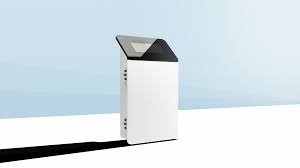
Advance cloud Data Logger – ZL6
SKU: ZL6 -

Compact data logger – CR300
SKU: CR300 -
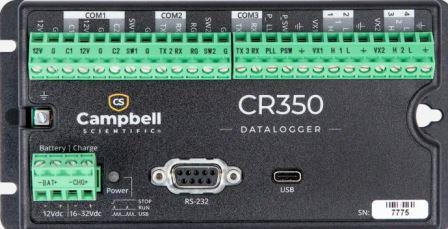
Compact data logger – CR350
SKU: CR350 -
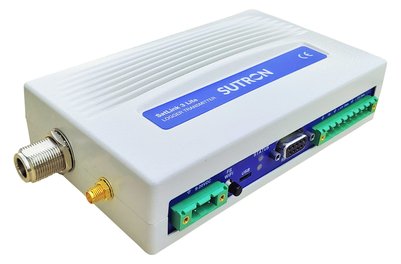
Data Logger – Sutron SatLink3 Lite
-
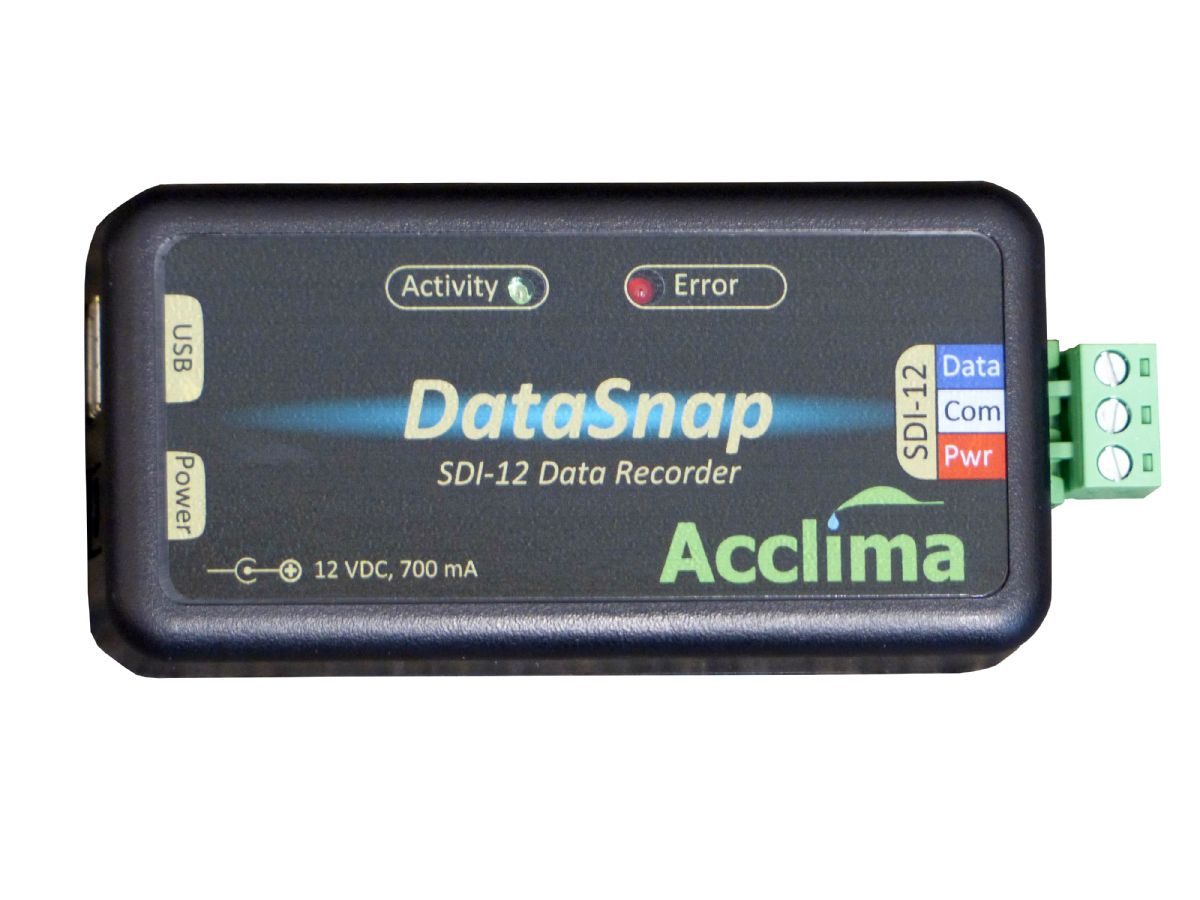
Data Snap
SKU: Data Snap -
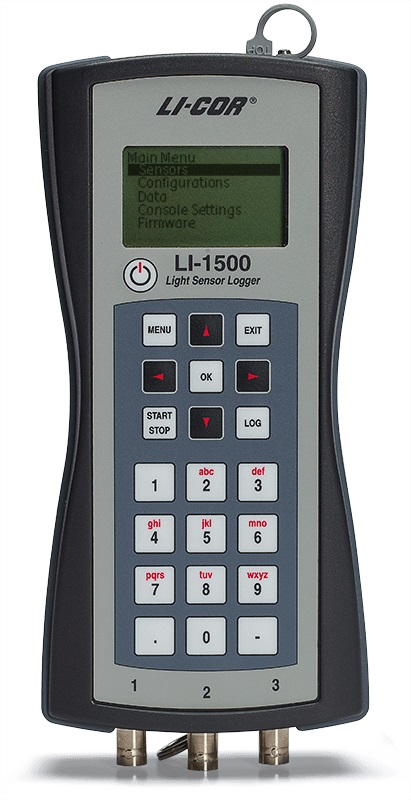
Light Sensors Data Logger – LI-1500
SKU: LI-1500 -
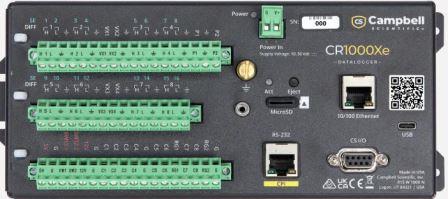
Measurement and Control Datalogger – CR1000xe
SKU: CR1000xe -
microCache Bluetooth Micro Logger – AT-100
SKU: AT-100 -
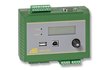
netDL Data Logger
SKU: netDL 500/1000 -
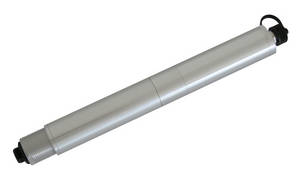
Rain Gauge
SKU: PreLOG -
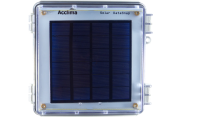
Solar Data Snap Data Logger – SolarDS
SKU: SolarDS -

State-of-the-Art Data Logger
SKU: CR6
Data loggers are core components of professional measurement systems. Their role is to receive data from sensors and measuring instruments, record it continuously, store it in internal memory and transfer it to a computer, a local server or a cloud system for analysis, display, reporting and decision-making.
A data logger turns a one-off measurement into a continuous monitoring system. Instead of visiting the measurement site and reading the data manually, you can set fixed sampling intervals, track changes over time, detect anomalies, trigger alerts and maintain an organized measurement history.
Data loggers are used in many fields, including meteorology, hydrology, agriculture, agrometeorology, irrigation, solar energy, wind energy, environmental science, academic research, civil engineering, soil monitoring, infrastructure systems, industry, quality control and remote measurement systems.
Meteo-Tech supplies a wide range of data loggers for both simple and advanced measurement systems, including compact loggers, multi-channel loggers, cloud-connected data loggers, portable loggers, Bluetooth-based solutions and loggers for autonomous solar-powered operation.
What Is a Data Logger?
A data logger is an electronic device that receives signals from one or more sensors, converts and processes the signals, and stores the measurement results at a predefined frequency.
Depending on the model and system, a data logger can measure and record parameters such as:
- Temperature
- Relative humidity
- Barometric pressure
- Wind speed and direction
- Precipitation amount and intensity
- Solar radiation
- Photosynthetically active radiation
- Voltage and electric current
- Water level
- Water flow rate
- Soil moisture
- Soil temperature
- Soil electrical conductivity
- Gas and pollutant concentrations
- Heat flux
- Data from analog and digital sensors
- Pulses, contact states and control signals
The data stored in the logger can be used for trend analysis, comparison between periods, operational control, documentation of environmental conditions, forecasting, scientific research, preventive maintenance and automatic system operation.
How Does a Data Logger Work?
A typical data acquisition system includes a sensor, a data logger, a power source and a means of communication. The sensor measures the physical parameter, and the data logger reads the resulting signal at defined intervals.
Once a measurement has been acquired, the logger can perform several operations:
- Convert the electrical signal into a clear engineering value.
- Perform calculations, averaging or filtering of the data.
- Store the data in memory.
- Compare the values against predefined thresholds.
- Activate a control output or alarm when a threshold is exceeded.
- Transfer the data via cable, network, cellular communication, Bluetooth or a cloud system.
In advanced systems, a large number of sensors can be connected to the same logger, each sensor can be assigned a different sampling frequency, and control actions can be performed based on the measured data.
The Benefits of Using Data Loggers
Continuous Long-Term Measurement
A data logger can record measurements for hours, days, months or even longer periods, depending on memory capacity, sampling frequency and power source. This provides a complete picture of conditions at the measurement site rather than relying on a momentary reading alone.
Improved Data Reliability
Automatic acquisition reduces errors caused by manual recording, inconsistent readings or differences between operators. The data is stored in an organized format and can be analyzed and compared.
Operation at Remote Sites
Data loggers are suitable for installation at meteorological stations, agricultural fields, reservoirs, streams, infrastructure sites and areas with no permanent operator presence.
Connection to a Wide Range of Sensors
Professional models support analog inputs, digital inputs, pulse counters and common communication protocols. This support makes it possible to integrate different types of sensors in the same system.
Remote Monitoring and Data Transfer
A data logger with cellular, Ethernet, Wi-Fi, radio or cloud connectivity lets you view data without physically visiting the site. Some systems also allow you to change settings, update software and receive alerts remotely.
Running Control Processes
A measurement and control logger can not only record data but also operate pumps, relays, valves, fans and other systems based on measured conditions.
Types of Data Loggers
Compact Data Logger
A compact logger is suitable for systems that require a cost-effective, reliable and small-footprint solution. It can be a good fit for weather stations, irrigation systems, agricultural monitoring, wind energy and systems with a limited number of sensors.
Meteo-Tech's data logger category includes, among others, the CR350 from Campbell Scientific, presented as a compact data logger designed for applications such as agrometeorology, irrigation, agriculture and wind energy.
Multi-Channel Measurement and Control Logger
A measurement and control logger is designed for more complex systems that include a large number of sensors, require high accuracy, variable sampling rates and advanced processing or control operations.
Loggers of this type are suitable for research stations, professional meteorological systems, environmental monitoring, energy facilities, atmospheric research and automation systems.
Advanced Research Data Logger
Research in energy balance, atmospheric fluxes and Eddy Covariance measurements requires a data logger with high speed, precise inputs and the ability to perform complex calculations in real time.
The CR6, for example, is designed for advanced measurement and control systems and combines fast communications, low power consumption, USB connectivity and improved analog input accuracy. On the Meteo-Tech website, it is associated with research applications, meteorological measurements, energy balance and Eddy Covariance systems.
Portable Data Logger
A portable logger is suitable for field measurements, temporary tests, calibration, sensor comparison and data collection at multiple points. It typically includes a display, keypad, internal battery and the ability to download data after the measurement is complete.
Portable loggers can be used to measure light, solar radiation, environmental conditions and other parameters, depending on the sensors connected to them.
Cloud Data Logger
A cloud-based data logger transmits measurements to an online platform. Users can view data on a computer, tablet or phone, generate graphs, compare sensors and identify anomalies.
This type of solution is particularly well suited to agriculture, environmental research, soil monitoring, greenhouses, remote stations and systems that require convenient access to data from multiple sites.
The solutions featured in the category include the ZL6, a data logger with cloud-based data transfer, Bluetooth configuration and communication capabilities suited to remote monitoring.
Compact Bluetooth Logger
A data logger with Bluetooth allows configuration, data download and status checks via a compatible mobile device. The main advantage is simple operation in the field without the need for a permanent computer connection.
Compact battery-powered models can be suitable for a single sensor, temporary experiments and small measurement stations.
Solar Data Logger
At remote sites with no available power supply, a data logger with a solar panel and rechargeable battery can be used. The system harvests energy during the day and continues operating at night or during periods without direct sunlight.
A solar logger is particularly suitable for agriculture, soil monitoring, irrigation, environmental research, hydrology and standalone weather stations.
Data Logger for SDI-12 Sensors
SDI-12 is a common communication interface for environmental, meteorological and hydrological sensors. It allows multiple digital sensors to be connected on a shared communication line while maintaining low power consumption.
A dedicated logger for SDI-12 sensors can supply power to the sensor, perform automatic queries and store the measurement results. The DataSnap and Solar DataSnap solutions featured in the category are designed for connecting SDI-12 sensors, including the option of autonomous operation using a solar power system.
Data Loggers for Meteorology
A data logger is the heart of an automatic weather station. Sensors for measuring temperature, humidity, wind, precipitation, barometric pressure, solar radiation and other parameters are connected to it.
The logger schedules the measurements, performs calculations and stores data such as:
- Minimum and maximum temperature
- Average temperature
- Relative humidity
- Atmospheric pressure
- Average wind speed
- Maximum wind gust
- Wind direction
- Accumulated precipitation
- Rainfall intensity
- Global radiation
- Sunshine hours
- Calculated evaporation
The system can be installed at professional weather stations, agricultural fields, airports, energy facilities, universities and research sites.
Data Loggers for Agriculture and Irrigation
In modern agriculture, tracking soil conditions, weather and crop status is of great importance. Connecting a data logger to soil moisture, soil temperature, conductivity, rainfall and radiation sensors makes it possible to base irrigation decisions on measured information.
The data can help with:
- Scheduling irrigation
- Adjusting the amount of water
- Preventing over-irrigation
- Reducing water consumption
- Tracking water infiltration into deeper soil layers
- Detecting faults in the irrigation system
- Assessing conditions for disease development
- Managing greenhouses and orchards
- Planning agricultural operations according to the weather
Data Loggers for Hydrology and Water Resources
Hydrological systems require continuous data acquisition from level meters, flow meters, rain gauges and water quality sensors. The data logger stores the measurements and can transmit them to a control center via a cellular network, the internet, radio or satellite communication.
Common applications include:
- Level monitoring in rivers and streams
- Reservoir level measurement
- Well and groundwater monitoring
- Water discharge measurement
- Flood warning systems
- Drainage basin management
- Water infrastructure monitoring
- Wastewater treatment plant monitoring
The OTT netDL 500 and OTT netDL 1000 were developed for hydrological and meteorological applications and offer data transmission options via the internet and cellular networks, together with low power consumption.
Data Loggers for Solar and Wind Energy
Solar power plants and wind energy sites require continuous monitoring of environmental conditions and system performance.
At a solar site, the following can be measured:
- Solar radiation
- Plane-of-array irradiance
- Panel temperature
- Ambient temperature
- Wind speed
- Energy produced
- Voltage and current
- Inverter status
At a wind energy site, wind speed, wind direction, pressure, temperature, humidity, turbulence and data from different heights on the mast can be measured.
Combining the data makes it possible to assess performance, detect efficiency losses, compare expected and actual output, and improve system design.
Data Loggers for Environmental and Academic Research
Data loggers are used by researchers at universities, research institutes and field laboratories. They make it possible to conduct long-term experiments, synchronize multiple sensors and store large amounts of data.
Common research applications include:
- Atmospheric research
- Climate research
- Ecology
- Energy balance
- Soil-water-plant relations
- Plant physiology
- Hydrology
- Geology
- Air pollution monitoring
- Water resources research
- Solar radiation research
- Measurement of fluxes between the land surface and the atmosphere
Communication and Data Transfer
The method of data transfer is one of the most important considerations when choosing a logger. Communication options may include:
- USB
- RS-232
- RS-485
- Ethernet
- Wi-Fi
- Bluetooth
- Cellular modem
- Radio communication
- Satellite communication
- Modbus
- SDI-12
- Direct connection to a cloud system
For a system installed close to the user, a USB or Bluetooth connection may be sufficient. At a remote site, it is generally better to use cellular, radio, internet or satellite communication.
You should also check whether the system allows two-way access. Such access can enable not only data retrieval but also remote configuration changes, resets, status checks and software updates.
How to Choose a Data Logger?
Sensor Type
Check which sensors will be connected to the system and what signals they produce. Different sensors may output voltage, current, resistance, pulses, a digital signal or serial communication.
Number of Measurement Channels
Calculate the current number of sensors and leave room for future expansion. Choosing a logger without enough inputs may require replacing the system when sensors are added.
Accuracy and Resolution
Measurement accuracy is affected by the sensor, the wiring and the logger. In research or regulatory applications, it is important to choose a logger with resolution and accuracy that match the required measurement level.
Sampling Frequency
Standard weather measurements can be taken at intervals of seconds or minutes, while measurements of fluxes, vibrations or fast processes may require sampling at a much higher frequency.
Memory Capacity
The required memory capacity depends on the number of channels, sampling frequency, retention period and data transfer frequency. A remote system that does not communicate regularly needs sufficient storage capacity for long periods.
Power Consumption
In solar or battery-powered systems, it is important to choose a logger with low power consumption. The consumption of the sensors, communication devices and accessories must also be taken into account.
Environmental Conditions
The logger must be suited to site conditions, including temperature, humidity, dust, rain, radiation, salinity and vibration. In some cases, the logger must be installed inside a sealed, protected enclosure.
Software and Data Management
User-friendly software lets you configure the logger, view measurements, generate graphs, export files and manage multiple stations. It is advisable to check whether data can be exported to common formats such as CSV for use with Excel or analysis software.
Control and Alarm Capabilities
When automatic equipment operation is required, choose a logger with suitable control outputs. When reporting of anomalies is required, check whether alerts can be sent by email, by message or via a cloud system.
What Is the Difference Between a Data Logger and a Sensor?
The sensor is the component that measures the physical parameter. The data logger receives the signal from the sensor, records it and stores it.
For example, a temperature sensor detects the temperature, while the data logger reads the sensor every minute, stores the result and transfers it to the monitoring system.
Can a Data Logger Operate Without a Computer?
Yes. Most professional data loggers are designed to operate independently once configured. A computer is typically used for configuration, data download or viewing information, but does not need to be connected during measurement.
In cloud systems, the logger can transfer data automatically, so it can be viewed remotely without a permanent computer on site.
Can Multiple Sensors Be Connected to a Single Logger?
Yes, provided the logger's number of inputs and interface types match the sensors. Advanced loggers can accept a large number of analog and digital sensors and manage them with a single measurement program.
Is a Data Logger Suitable for Outdoor Conditions?
Many loggers are designed for use at field stations, but installation inside a suitable cabinet or enclosure is usually required. Consider the temperature range, ingress protection rating, humidity, solar radiation and the risk of water or dust ingress.
Is Real-Time Data Available?
Yes. When the logger is connected to cellular communication, a network, radio or the cloud, up-to-date data can be received according to the configured transmission frequency. It is important to distinguish between sampling frequency and transmission frequency. The logger can measure every second but transmit the data only once every few minutes, for example.
Meteo-Tech Data Logger Solutions
Meteo-Tech supplies data loggers and data acquisition systems for a wide range of professional applications. The category includes solutions such as the CR350, CR1000Xe, CR6, LI-1500, DataSnap, ZL6, microCache AT-100 and the Solar DataSnap logger for SDI-12 sensors. This range includes compact loggers, measurement and control systems, portable loggers, cloud solutions and loggers for autonomous field operation.
Choosing the right data logger should be based on the sensor type, number of measurement points, accuracy level, sampling rate, field conditions, communication method, power supply and data management requirements.
The Meteo-Tech team provides professional consulting on matching the data logger, sensors, communication, power supply and system components to project requirements, for meteorological, hydrological, environmental, agricultural, research and industrial systems.