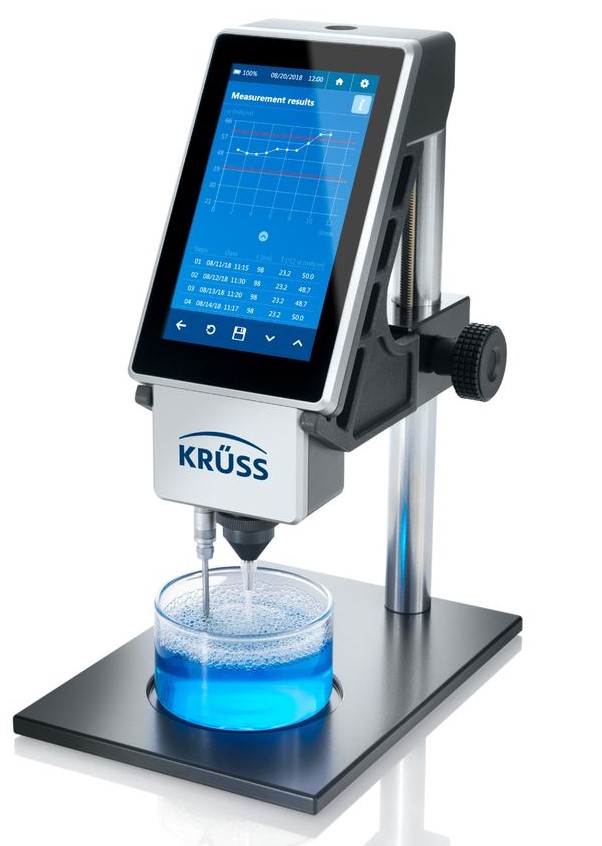
Tensiometers, also known as surface tensiometers or surface tension meters, are scientific instruments designed to quantify the surface tension of liquids and solids.
Tensiometers, also known as surface tensiometers or surface tension meters, are scientific instruments designed to quantify the surface tension of liquids and solids. They operate based on the principle of interfacial tension, measuring the force required to rupture or deform the surface of a liquid or solid.
Components of a Tensiometer
A typical tensiometer comprises several essential components, including:
- Probe: The sensing element responsible for interacting with the liquid or solid surface.
- Force Transducer: Converts the applied force into an electrical signal for measurement.
- Control Unit: Manages the operation of the tensiometer and displays the measured parameters.
- Software Interface: Allows for data analysis and visualization.
Applications of Tensiometers: Diverse Utility Across Industries
Research and Development
In research laboratories, tensiometers serve as indispensable tools for studying the behavior of liquids at interfaces. Researchers leverage these instruments to investigate phenomena such as wetting, adhesion, and surface energy, enabling advancements in fields ranging from materials science to biotechnology.
Quality Control in Manufacturing
In industrial settings, tensiometers play a crucial role in ensuring the quality and performance of manufactured products. By monitoring surface tension and contact angles, manufacturers can optimize processes, enhance product reliability, and minimize defects in diverse sectors, including pharmaceuticals, cosmetics, and electronics.
Environmental Monitoring
Environmental scientists utilize tensiometers to assess the impact of surface-active agents on natural ecosystems. By measuring surface tension variations in water bodies, researchers gain insights into pollution levels, surfactant concentrations, and ecological health, facilitating informed conservation efforts and remediation strategies.
Uses of Tensiometer
Material Science: In material science, tensiometers are used to measure the surface tension of liquids, which is important in understanding the properties of materials such as polymers, coatings, and surfactants.
Pharmaceuticals: Used in the pharmaceutical industry to measure the surface tension of liquid formulations. This helps ensure the quality and stability of pharmaceutical products.
Chemical Engineering: Tensiometers are important in chemical engineering processes where surface tension affects the behavior of liquids, such as in the production of emulsions, foams, and suspensions.
Environmental Science: Used in environmental science to study phenomena such as capillary action, water retention in soils, and groundwater movement. This information is valuable for understanding ecosystem dynamics and managing water resources.
Research and Development: Used in research and development across various fields to investigate the surface properties of liquids and develop new materials and technologies.